




























Recent reports have confirmed what was once only a suspicion—Winlator may indeed contain malware. While initial concerns pointed to user error, such as installing pirated games that carried malware, the latest findings suggest that the malware is embedded directly within Winlator itself. This is not just speculation but has been supported by community-led investigations, particularly from users on the r/EmulationOnAndroid subreddit.

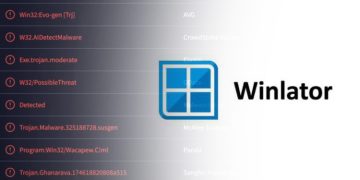
The discovery centers around a suspicious file included in the latest Winlator package: TestD3D.exe. Users flagged this executable for exhibiting abnormal and potentially harmful behavior. Analysis suggests that this file contains a known Trojan called Floxif, capable of corrupting and infecting executable files within the emulated Windows environment of Winlator. This is especially dangerous if infected files are transferred to an actual Windows PC, where Floxif may operate as a backdoor for more destructive malware payloads.
What Is Floxif?
Floxif is a Windows-based Trojan notorious for infecting .exe files and spreading rapidly once active on a host system. Although it seems to function in an offline capacity within Winlator, its behavior still poses a serious threat. Once Winlator-infected files are moved and executed on a native Windows system, Floxif could initiate deeper system compromise. Notably, the Floxif Trojan was previously involved in a 2017 supply chain attack on CCleaner following Avast’s acquisition of the company.
The compromised TestD3D.exe file is included with the Winlator APK and is typically used during the creation of new containers for running Windows games and apps on Android. This has raised widespread concerns within the emulation community and prompted further examination.
Community Testing and Developer Response
While Winlator’s developer dismissed the malware alerts as false positives, the user community conducted independent verifications using tools like VirusTotal. Multiple antivirus engines flagged the APK and TestD3D.exe as malware—Trojan types specifically—even after a hotfix was released. Continued positive detections raised questions about the hotfix’s effectiveness and whether deeper infection vectors remained.

In a more controlled effort, a Reddit user ran sandbox tests in an isolated PC environment. The user installed Winlator v10 Final, executed TestD3D.exe, played several games, and transferred the device’s Download folder to a Windows sandbox. Though Windows Defender found no threats, limitations in the test—such as using only one antivirus tool and testing specific scenarios—mean it couldn’t fully rule out other infection paths.
Further findings suggest that Floxif may primarily target .dll files inside the Winlator container rather than .exe files. Replacing key game and system .dll libraries could result in crashes and instability, which standard malware scans might miss, explaining why some transferred .exe files appeared clean during sandbox testing.
Risks to Android and Windows Users
Fortunately, Android users face limited direct risk since Android’s Linux-based architecture differs significantly from Windows. Malware like Floxif can’t typically affect Android’s system files. The threat remains isolated to Winlator’s emulated Windows environment.
However, serious danger arises when infected .exe or .dll files are moved to a real Windows machine. There have been user reports of Windows PCs becoming infected after transferring game folders previously run on Winlator via Wi-Fi. If Floxif activates, it can propagate across the system, potentially installing additional threats such as ransomware or spyware.As noted in the in-depth community analysis posted on witchihare.my.id, users who have built seemingly bootable Windows programs within Winlator or transferred content to their PCs should treat these files with extreme caution.
Source : r/EmulationOnAndroid, Eric Parker